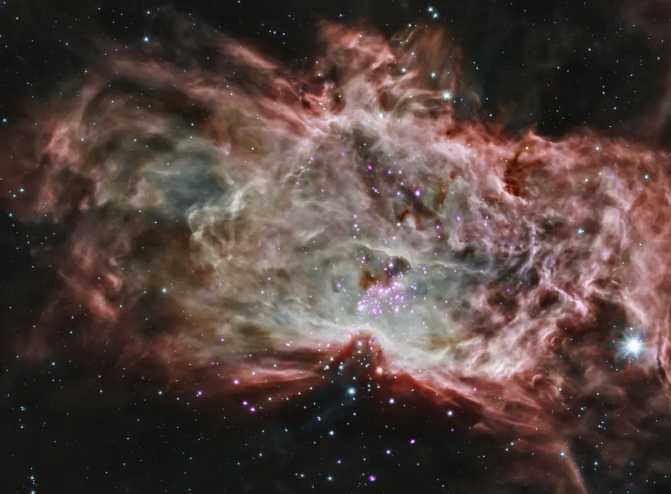
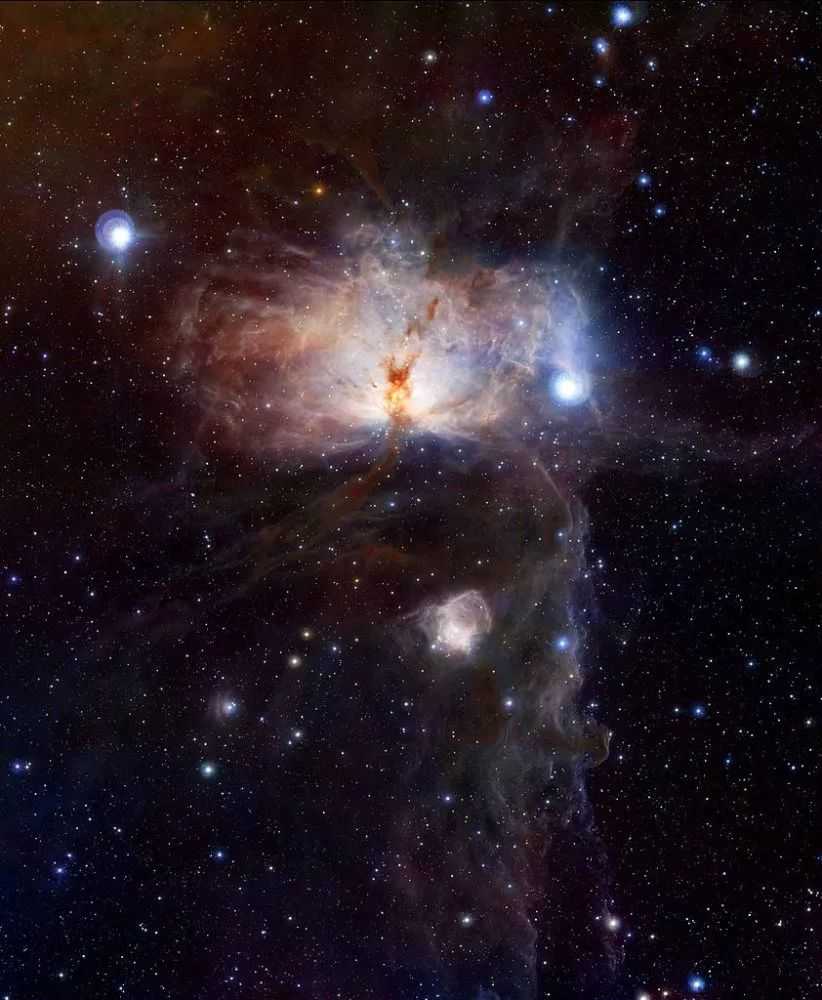
The designation NGC 2024 stems from the New General Catalogue (NGC), a monumental project compiled by Danish astronomer Johann Dreyer in 1888. Part of a three-volume work listing 7,840 celestial objects, the NGC aimed to consolidate observations from 18th- and 19th-century astronomers like William Herschel. Dreyer assigned NGC 2024 to the Flame Nebula based on its position in the sky (Right Ascension: 05h 41m 29s, Declination: -02° 19′ 38″), describing it as a "bright nebula with a star involved."
Source: Images from the Internet, if there is any infringement, please contact the removal of
This catalog became the gold standard for deep-sky objects, and today, NGC numbers remain synonymous with astronomical heritage. The Flame Nebula’s NGC entry reflects its status as a prominent emission nebula, ionized by the hot star Alnitak in Orion’s Belt, which illuminates the nebula’s fiery red hydrogen gas and dark dust lanes.
The alternative designation Sh2-277 comes from the Sharpless Catalog of H II Regions, published by American astronomer Stewart Sharpless in 1959. Focused exclusively on emission nebulae (H II regions) ionized by young stars, this catalog listed 317 objects across the Milky Way. Sharpless assigned Sh2-277 to the Flame Nebula, categorizing it by its hydrogen emission and spatial distribution.
Sharpless’ work emphasized the nebula’s role as a stellar nursery, highlighting its association with the Orion OB1 association— a group of massive, young stars that sculpt the nebula’s structure through their intense radiation and stellar winds. The Sh2-277 designation underscores the Flame Nebula’s scientific importance in studies of star formation and interstellar gas dynamics.
Astronomical objects often carry multiple designations because different catalogs prioritize various criteria:
- NGC numbers are positional, based on visual observations from telescopes of the 1800s.
- Sharpless numbers classify objects by physical properties (e.g., H II region emission).
For the Flame Nebula, both NGC 2024 and Sh2-277 serve as cosmic addresses, guiding astronomers to a region where new stars are born. While modern surveys like the Gaia mission have introduced new identifiers, the legacy of Dreyer and Sharpless lives on in these classic designations—reminders that every celestial object has a history as rich as the universe itself.
Today, telescopes like JWST peer into NGC 2024/Sh2-277 to study baby stars hidden within its dust clouds, proving that even a century after its cataloging, the Flame Nebula continues to ignite scientific curiosity.