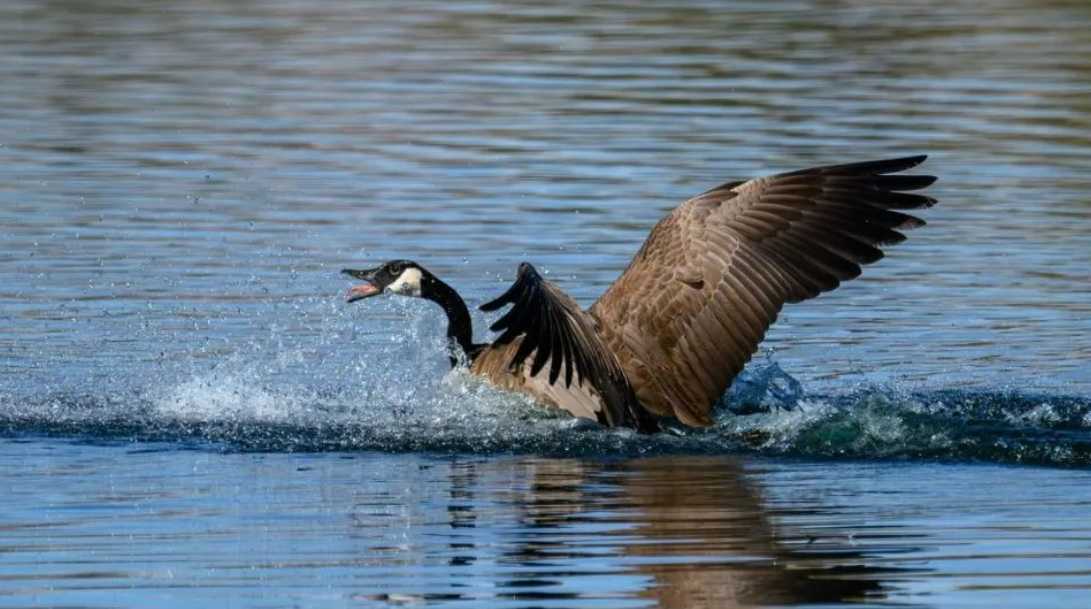
These geese are highly adaptable when it comes to habitats. They thrive in a wide range of environments, from the vast wetlands, marshes, and lakes of their native North America to the urban parks and golf courses that have sprung up in human - modified landscapes. They are herbivores, primarily grazing on grasses, aquatic plants, and sometimes agricultural grains. Their serrated bills are perfectly designed to clip and pull vegetation, whether on land or while dabbling in shallow water. During migration, they form the iconic V - shaped formations in the sky, honking loudly as they travel long distances. Some populations that once migrated extensively are now choosing to stay in urban and suburban areas year - round, taking advantage of the abundant grassy lawns and open water sources.
However, the Canada Goose's success story has a flip - side. In some areas, their large numbers have led to them being considered pests. Their droppings can contaminate water bodies and public spaces, and their grazing can damage lawns and crops. Additionally, their presence near airports poses a significant threat to aviation safety, as collisions with aircraft can be catastrophic. Despite these challenges, conservation efforts have helped maintain their populations, which were once at risk in the early 20th century. Today, they are a common and sometimes controversial part of our natural and urban landscapes, symbolizing both the adaptability of wildlife and the complex relationship between humans and nature.